Everything you need to know about the Lake Atitlán volcanoes — safety, eruption history, hiking difficulty, cultural insight, and how to choose the right guided adventure.
Lake Atitlán has a way of pulling you in.
Maybe it’s the early morning light stretching across the water. Maybe it’s the rhythm of wooden boats crossing between villages. Or maybe it’s the three volcanoes rising dramatically from the lake’s edge, quiet and powerful against the sky.
I’m Lee Beal, owner of Kayak Guatemala. I’ve lived at Lake Atitlán for over 20 years, guiding travelers across this lake by kayak, up its volcanoes on foot, and deep into the traditions of the Maya communities that call this place home. I’ve hiked these trails hundreds of times, in dry season dust and in thick rainy-season mist. I’ve seen horned guans in the canopy and watched the Pacific shimmer from 3,500 meters above sea level.
In this blog, we’ll explain how many volcanoes are at Lake Atitlán, whether they are safe to hike, and how to choose the right volcano adventure for your trip to Guatemala.
Key Takeaways
- There are three volcanoes at Lake Atitlán — each with a distinct personality and level of difficulty.
- They are currently dormant and safe to hike, with the right preparation and local guidance.
- Each volcano offers a different experience, from cloud forest birdlife to crater camping.
- Booking with an experienced, community-connected operator ensures safety, authenticity, and meaningful impact.
How Many Volcanoes Are at Lake Atitlán?
Let’s start with the basics.
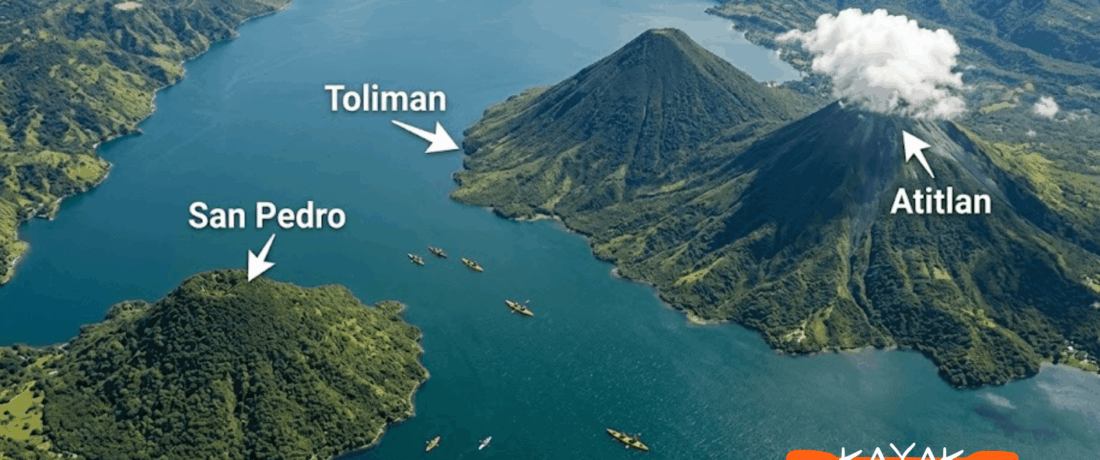
There are three volcanoes rising above Lake Atitlán:
- Volcán San Pedro
- Volcán Tolimán
- Volcán Atitlán
They form part of the southern rim of a massive caldera — the result of a catastrophic eruption roughly 84,000 years ago that created the basin now filled by the lake.
When you stand on the northern shore in Panajachel or Santa Cruz and look south, you’ll see them lined up like guardians. San Pedro to the west, Tolimán in the center with its distinctive twin peak, and Atitlán Volcano rising sharply to the east — the tallest and most dramatic of the three.
Understanding this geography helps you plan your hikes. Each volcano is accessed from a different lakeside village, and each offers a completely different terrain and atmosphere.
Are the Lake Atitlán Volcanoes Active?
This is one of the most common questions I get.
The short answer: They are dormant and currently safe to hike.
- San Pedro has been dormant for approximately 40,000 years.
- Tolimán has not erupted in centuries.
- Atitlán Volcano last erupted in 1853 — and you can still see remnants of that eruption near the summit crater.
Guatemala sits at the intersection of the North American and Caribbean tectonic plates, and the country is home to 37 volcanoes. Some, like Fuego near Antigua, are very active. But the Lake Atitlán volcanoes are not among them.
That said, we always stay informed and prioritize safety. Conditions in Guatemala can change, and responsible operators monitor seismic updates and community advisories.
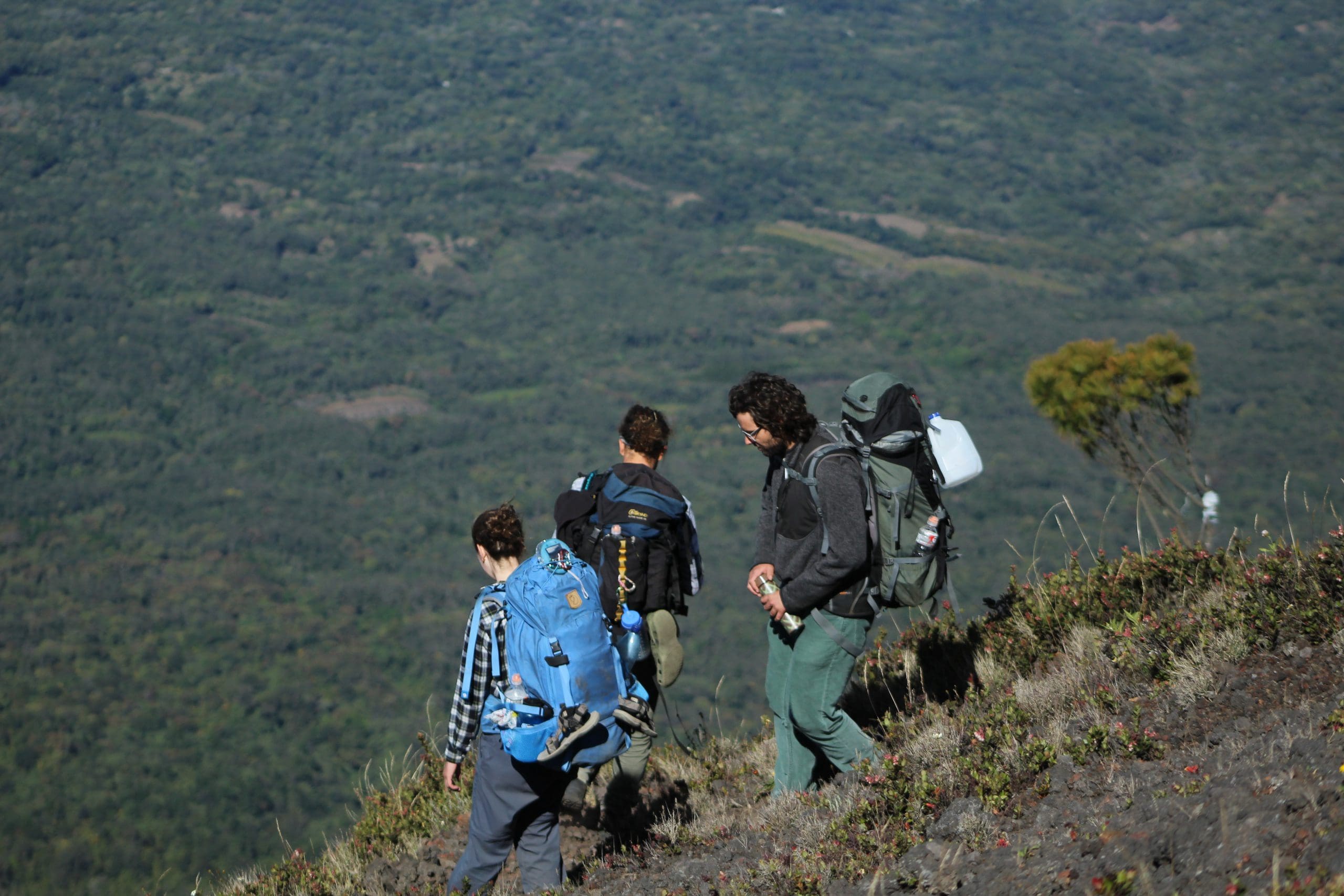
Is It Safe to Hike the Lake Atitlán Volcanoes?
From a volcanic standpoint, yes.
But hiking safety is about more than eruptions.
1. Terrain & Physical Challenge
These are steep, high-altitude climbs. All three volcanoes rise above 3,000 meters (9,800+ feet). The trails are not technical mountaineering routes, but they are physically demanding.
Expect:
- Sustained uphill hiking (3–5 hours on ascent)
- High humidity in cloud forest zones
- Cool, windy summit conditions
- Rapid weather changes
If you’re reasonably fit and accustomed to hiking, you’ll be fine. But preparation matters.
2. Altitude Awareness
Even if you’re staying at Lake Atitlán (around 1,500 meters), you’ll still gain significant elevation. Go slow, hydrate well, and fuel properly.
3. Robbery
Guatemala is a developing country, and like many rural areas with limited economic opportunity, there have been occasional reports of robberies on certain Lake Atitlán hiking routes — particularly when travelers hike independently and without coordinating locally.
It’s important to keep this in perspective. These incidents are not common, and thousands of hikers safely summit the volcanoes every year. Most past issues have involved solo hikers using unofficial trail entrances or going without notifying local communities.
Hiring a local guide greatly reduces risk. When you hike with a reputable operator, you:
- Register through the proper community channels
- Use the safest, most current routes
- Hike with someone known by locals along the trail
At Kayak Guatemala, our guides are deeply connected to the surrounding communities. That local presence adds visibility, accountability, and peace of mind — while also giving you cultural insight and a far richer experience than hiking alone.
Which Lake Atitlán Volcano Is Best to Hike?
This depends entirely on your personality and fitness level.
Let me break it down honestly.
1. Volcán San Pedro – The Classic Summit Experience
- Elevation: ~3,020 m (9,908 ft)
- Offers panoramic sunrise views (in exchange for a 100Q entry fee at the summit)
- Shorter hiking time compared to other Lake Atitlan volcanoes
- Moderate difficulty - anyone can manage this hike with decent fitness levels
San Pedro is the most iconic and accessible of the Lake Atitlán volcanoes. Located near San Pedro La Laguna, this is one of the most popular hikes around the lake.
The hike begins near coffee and avocado farms. As you climb, the trail transitions into cloud forest. Ferns drip with moisture. Bird calls echo above you. On a good day, you might spot the endangered horned guan — a striking turkey-sized bird with a red horn atop its head.
The summit, at 3,020 meters, offers unrestricted panoramic views across the entire lake basin. On clear mornings, you feel like you’re standing above the clouds.
San Pedro has been dormant for 40,000 years, making it completely safe from volcanic activity.
This is our #1 hiking expedition at Lake Atitlán for good reason. It’s challenging, rewarding, and achievable in a single day.
Book Volcán San Pedro hike with a guide
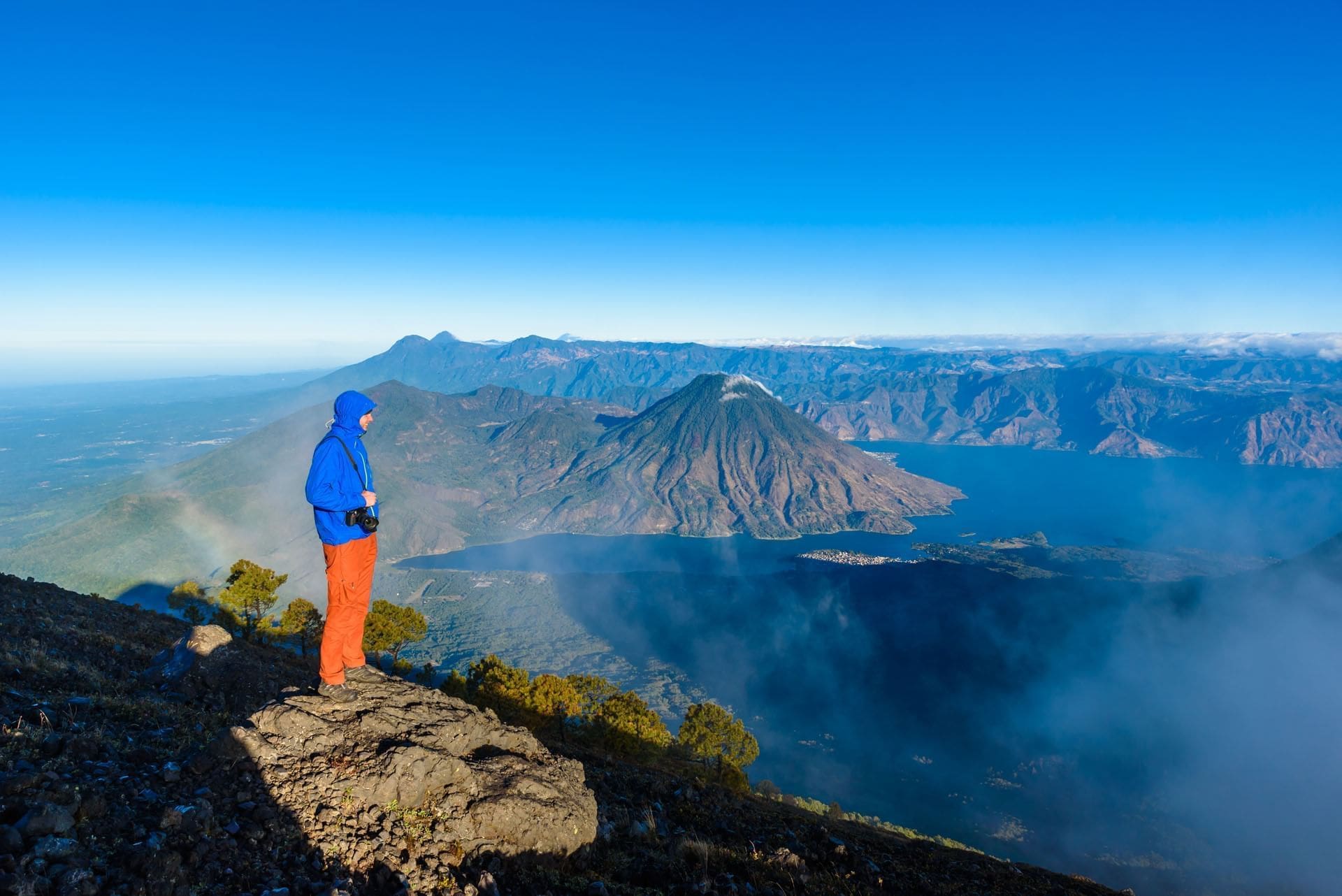
2. Volcán Tolimán – Wild & Solitary
- Elevation: ~3,158 m (10,361 ft)
- Moderate difficulty - the most rugged and less frequently climbed
- Sacred to local Maya communities
- Tolimán feels more “off the beaten track”.
The hike starts near a local market, weaving past fields of beans and coffee before entering forest. You’re unlikely to see other travelers. Just farmers, birds, and sweeping views.
The volcano features an imploded crater, and ancient lava flows remain visible near the summit.
Tolimán is ideal if you want fewer crowds, raw terrains and a sense of discovery.
It’s a personal favorite for experienced hikers who want something less traveled.
Book Toliman Volcano hike with a guide
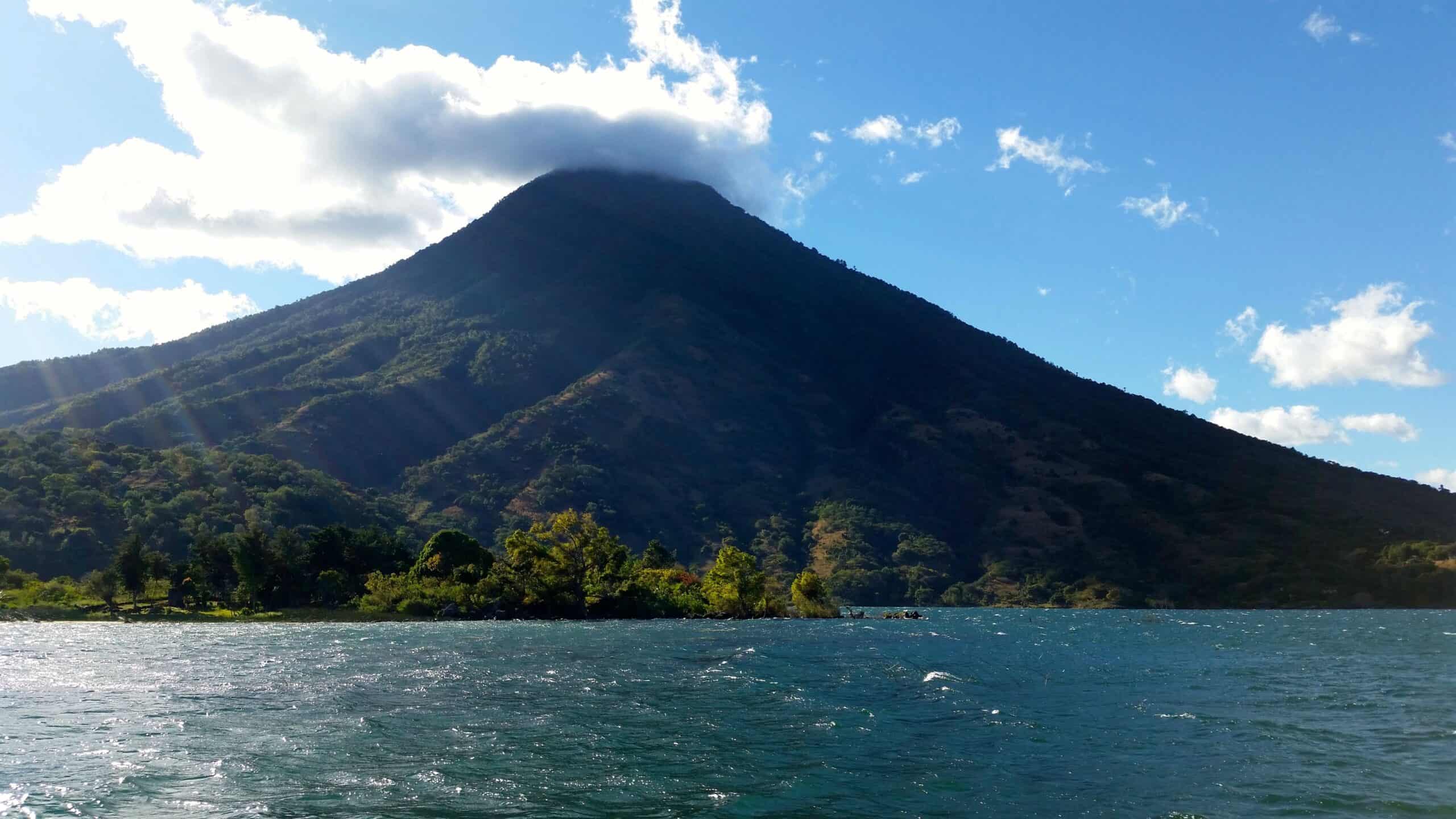
3. Volcán Atitlán – For True Adventurers
- Elevation: ~3,537 m (11,604 ft)
- High difficulty level: this hike is steep and technical, plus it can be rocky and slippery, especially during the rainy season
- Overnight camping: people usually do it over 2-days and camp at the crater, which means hiking with tents & heavier equipment
At 3,535 meters, Atitlán Volcano is the tallest of the three — and the most demanding.
This hike is steep and relentless. The terrain is rugged volcanic rock. But the payoff is extraordinary.
From the summit, you can see:
- Acatenango
- Fuego
- Tolimán
- Lake Atitlán
- And even the Pacific Ocean on clear days
We camp overnight near the crater rim. With a 250-meter-diameter crater and visible eruption remnants from 1853, it’s a powerful reminder of Guatemala’s geological forces.
This is not a casual hike. It’s for committed adventurers.
Book Atitlan Volcano hike with a guide
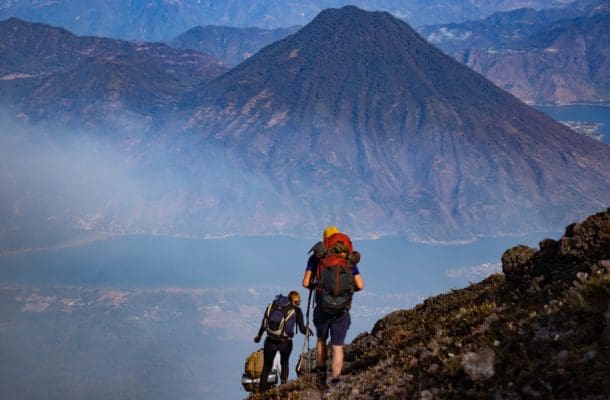
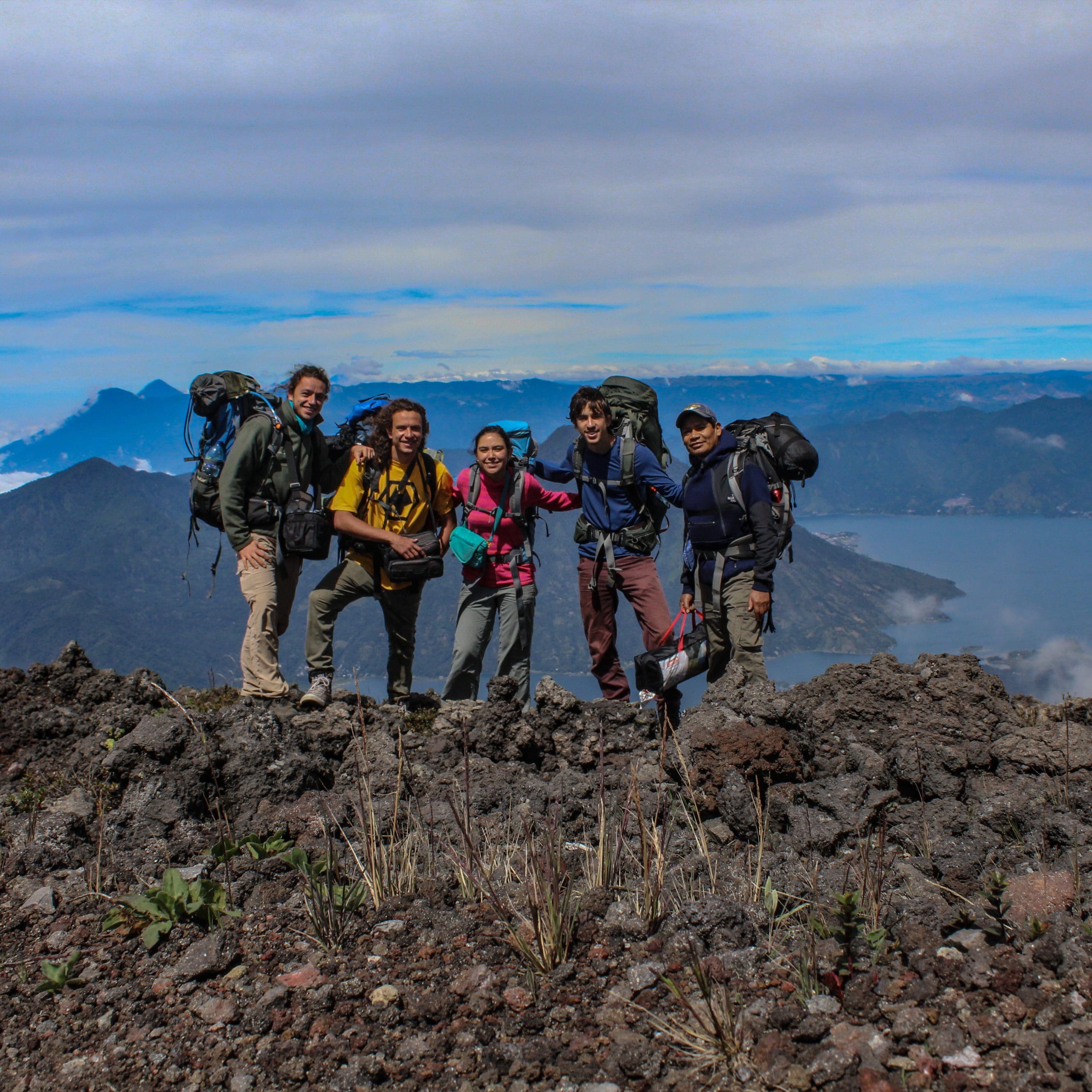
How Difficult Are the Lake Atitlán Volcano Hikes?
Let’s be transparent: these are not easy hikes.
At the same time (with the exception of Atitlan), they are not highly technical climbs. But they are physically demanding due to:
- Steep elevation gain
- High humidity
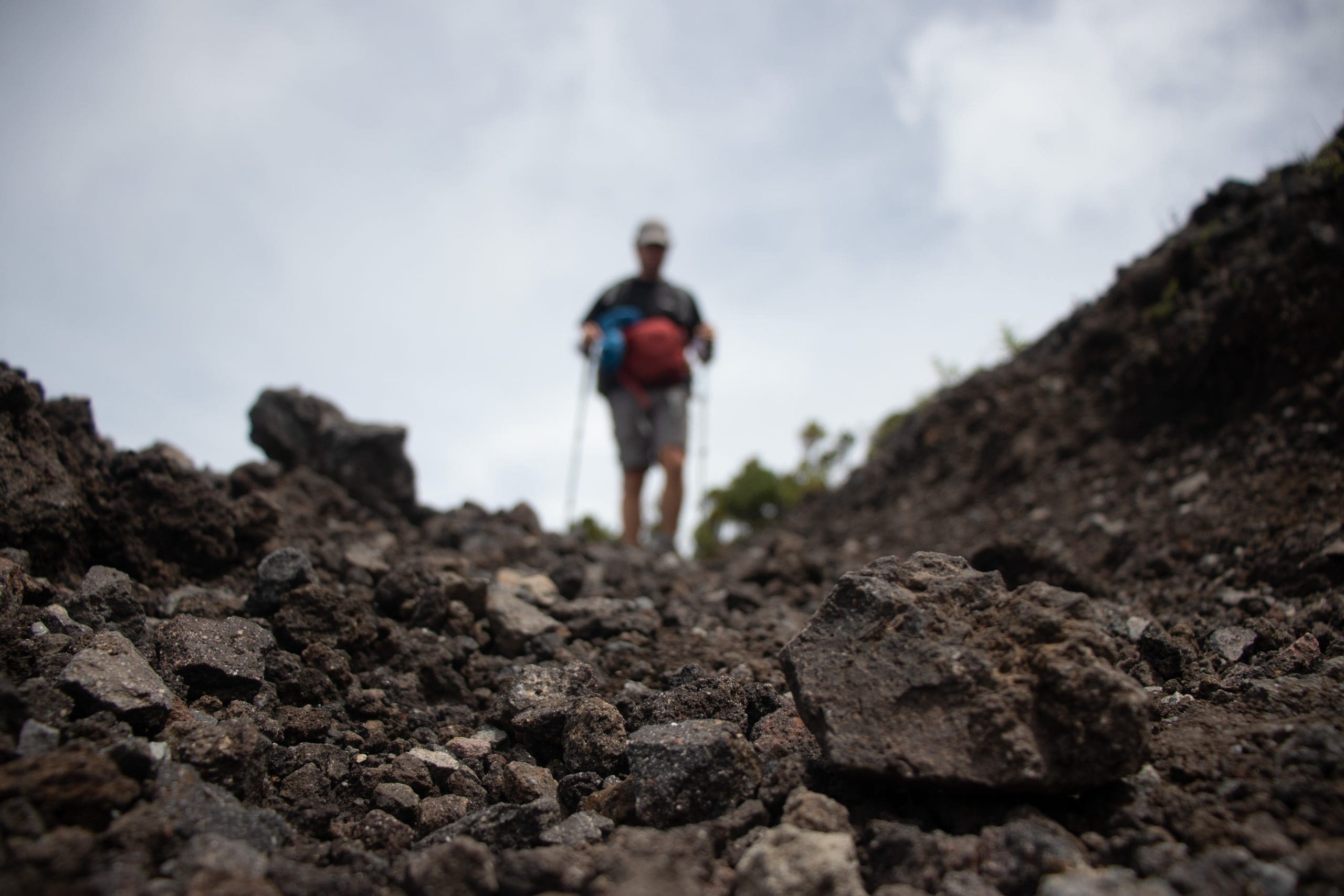
- Loose volcanic terrain
- Long ascent times
If you regularly hike 6–8 miles with elevation gain, you’ll manage well. It’s just Atitlan which requires serious preparation and more hiking experience, or for inexperienced hikers, definitely a guide.
Do You Need a Guide to Hike the Lake Atitlán Volcanoes?
It’s important to recognize the value of a guide. They know the trail, the terrain, and the neighbors along the way. If something unexpected happens — weather shifts, altitude fatigue, or a wrong turn — they’re there to handle it calmly and quickly.
Beyond navigation, guides add real depth. They share Maya cultural traditions, explain local agriculture, spot wildlife you’d otherwise miss, read mountain weather patterns, and coordinate with the communities who manage the trails.
At Kayak Guatemala, our bilingual guides are experienced and deeply rooted in the lake’s communities — many grew up on these slopes. When you book with us, you’re not just hiring a guide; you’re supporting responsible tourism that keeps these volcano trails safe and sustainable.
When Is the Best Time to Hike the Lake Atitlán Volcanoes?
Dry season (November–April) offers the clearest summit views.
Mornings are best. Clouds tend to build by early afternoon.
Rainy season (May–October) can still be beautiful — lush forest, dramatic mist — but expect muddy trails and limited visibility at times.
My advice? Start early. Bring layers. Always pack rain protection, even in dry season.
What Should You Pack for a Lake Atitlán Volcano Hike?
Keep it simple but prepared:
- 2–3 liters of water
- High-energy snacks
- Lightweight rain jacket
- Warm layer for summit
- Proper hiking shoes
- Sunscreen & hat
- Small cash for community entrance fees
We provide detailed packing guidance before every tour.
Other Ways to Experience the Lake Atitlán Volcanoes
Not everyone wants to summit.
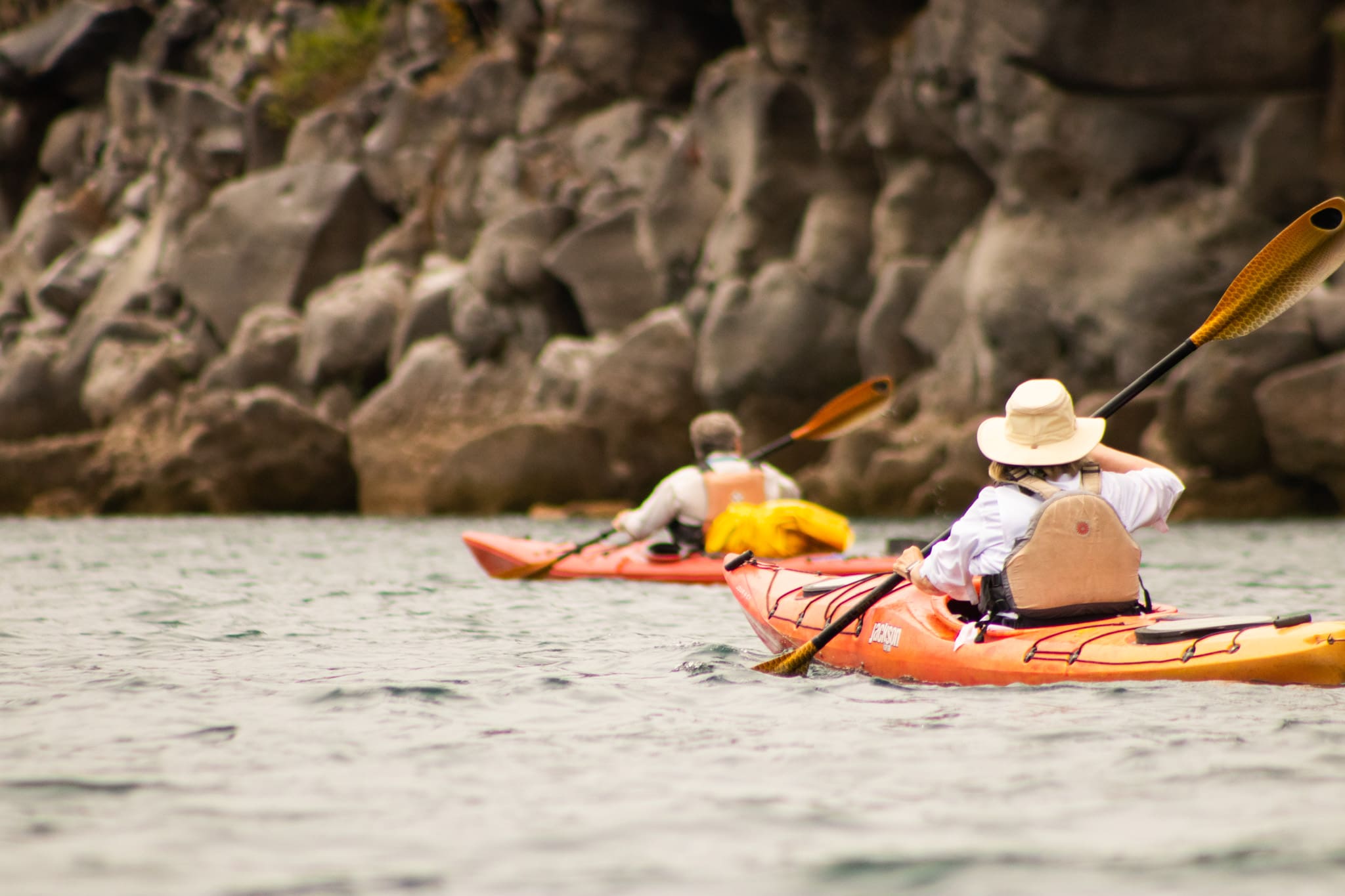
You can also experience the volcanoes by:
Book Your Lake Atitlán Volcano Tour with Kayak Guatemala
I started Kayak Guatemala because I fell in love with this lake, and after 20 years living and guiding here, I know these volcanoes inside and out.
Experience and safety matter. We keep our groups small, monitor weather and trail conditions, coordinate with local communities, and hike at a steady, responsible pace. Our bilingual guides are trained, professional, and deeply connected to the villages around the lake — many grew up on these slopes.
We offer:
Each tour is designed to combine adventure, local knowledge, strong safety standards, and genuine cultural connection — so you leave with more than just summit photos.
Final Thoughts: The Lake Atitlán Volcanoes Are More Than Mountains
They are sacred landscapes.
They are ecosystems filled with rare birds and old-growth forest.
They are reminders of Guatemala’s geological power and cultural resilience.
Whether you choose to summit one, paddle beneath them, or simply watch the sun set behind their silhouettes, the Lake Atitlán volcanoes will shape your experience here.
If you’re ready to explore them safely and authentically, we’d love to guide you.