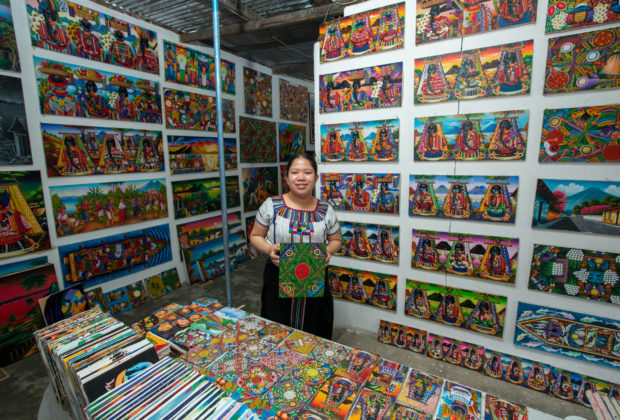
Discover authentic Guatemala Christmas traditions, festive markets, Mayan ceremonies, and local celebrations around Lake Atitlán, guided by insights from twenty years of living here.
I’m coming up on my twentieth Christmas here at Lake Atitlán. Hard to believe sometimes. My wife Elaine and I moved from the United States back when Kayak Guatemala was just an idea, and the lake has been home ever since.
Over the years, we’ve watched the holiday season unfold in these villages again and again. We’ve guided travelers through the markets, shared meals in local homes, and spent countless Christmas Eves listening to fireworks echo between the volcanoes.
Because of that, guests often turn to us with questions about what Christmas is actually like here. What do families do. What can visitors join. How do the Mayan traditions blend with Catholic celebrations. And how can travelers experience the season respectfully, without feeling like outsiders.
In this blog we will explain Guatemala Christmas traditions, what Christmas in Lake Atitlán looks like across different villages, and how travelers can meaningfully participate through our tours, classes, and cultural activities.
Key Takeaways
- Christmas in Guatemala blends Catholic and Mayan traditions, creating a warm, community centered celebration.
- Every village around Lake Atitlán celebrates differently, with processions, markets, foods, and local customs.
- Kayak Guatemala offers cooking classes, village tours, and Mayan fire ceremonies that let visitors participate authentically.
- Travelers visiting in December should plan ahead for closures, transport changes, and popular local events.
Guatemala Christmas Traditions: A Closer Look at the Real Customs
Guatemalan Christmas traditions run through the entire month of December. They’re simple, meaningful, and deeply rooted in family life. Here’s what you’ll see most often.
Tradition #1 Nochebuena
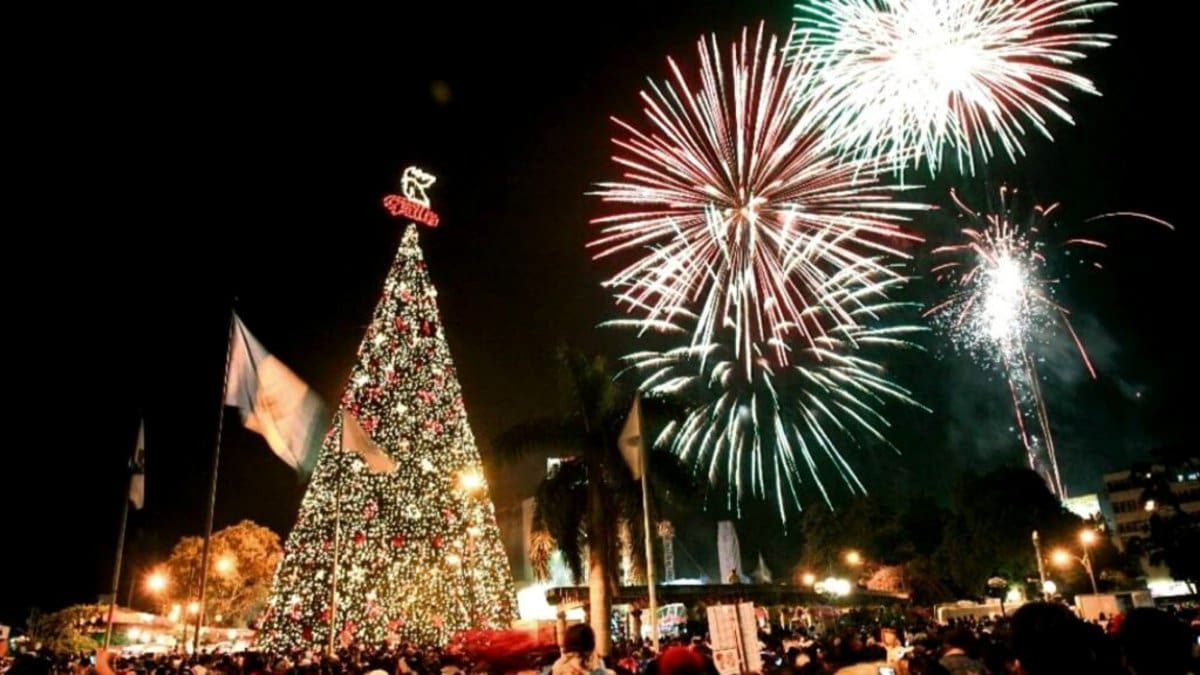
Nochebuena is the heart of the season. Families gather late on December 24, share a long meal, visit neighbors, and wait for midnight fireworks. It’s not rushed or staructured, just relaxed and family focused. If you’re staying at the lake, you’ll hear laughter and firecrackers moving from house to house all evening.
Tradition #2 Tamales
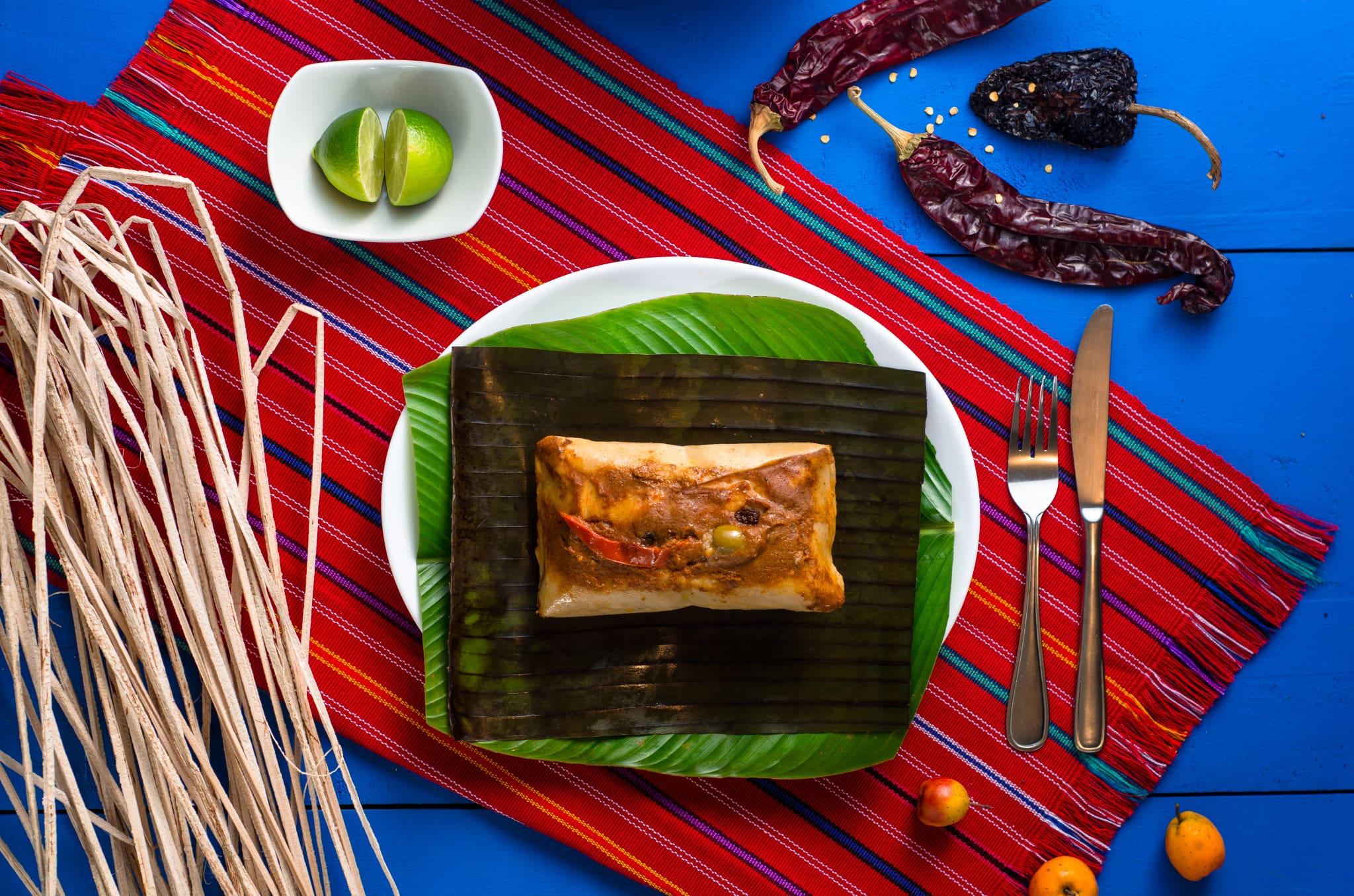
Tamales are the signature Christmas dish. Preparing them takes days. Families clean banana leaves, mix the masa, cook the recado, and fold hundreds of tamales together. Some prefer red tamales with tomato based sauce, others make black tamales with chocolate and spices. It’s a tradition you can actually experience in our Guatemalan Cooking Class, where Alicia teaches travelers how these holiday foods are made in her home kitchen.
Tradition #3 Posadas
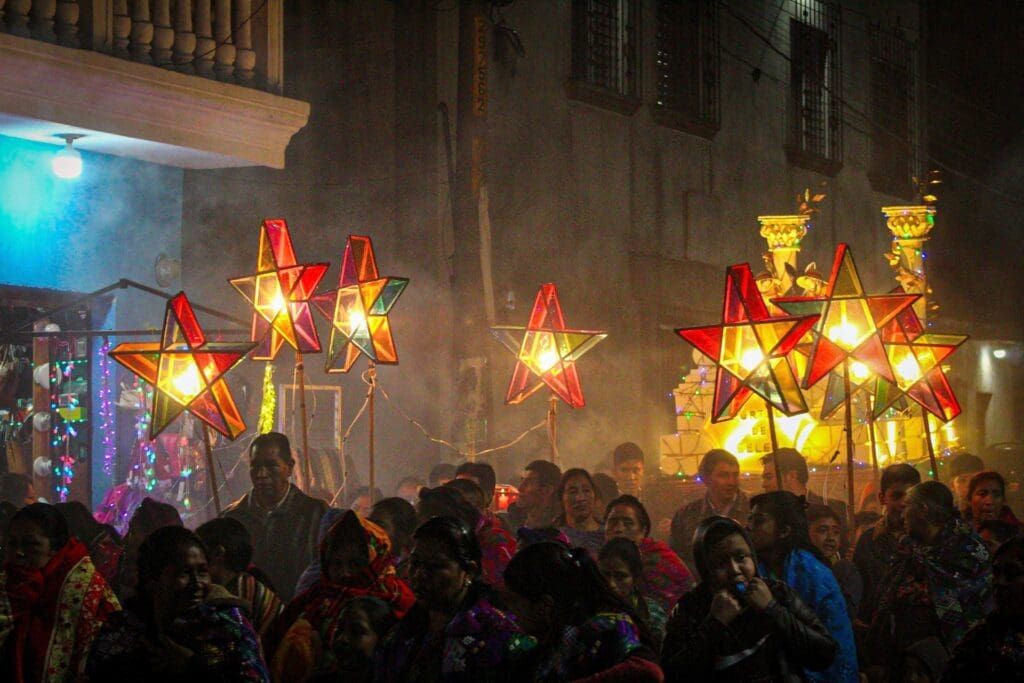
Posadas begin in early December. Groups walk from house to house carrying candles and singing songs that reenact Mary and Joseph’s search for shelter. Each night a different home welcomes the group. You’ll see these processions in many Lake Atitlán villages. Even if you’re watching from the street, the warmth of it is hard to miss.
Tradition #4 Nativity Scenes and Pine Needles
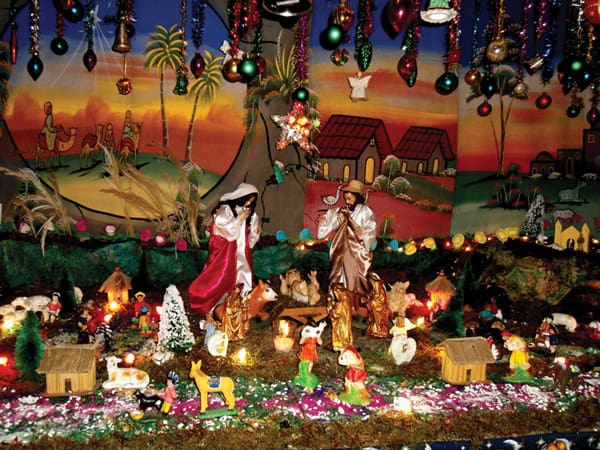
Instead of Christmas trees, most Guatemalan homes create detailed nativity scenes. Families collect moss, small branches, and river stones to build them. Pine needles are spread across the floor and around the entrance. The smell of pine becomes part of December here. It’s simple but beautiful, and you’ll see it everywhere around the lake.
Tradition #5 Midnight Fireworks
At midnight on Christmas Eve, everything goes loud and bright. Fireworks fill the sky, and the lake reflects every burst of color. Kids run outside with sparklers, and entire families watch from rooftops and porches. If you’re staying in a lakeside village, you’ll have a front row seat to it all.
These are the traditions you’ll find everywhere in Guatemala.
But Lake Atitlán’s villages add their own layers onto the holiday season. That’s what makes this region special.
Now, let’s move closer to what you can expect here around the lake.
Christmas in Lake Atitlán: What the Villages Actually Do
After two decades living here, one thing I’ve learned is that no two villages celebrate the holidays the same way. The traditions may share a foundation, but the way communities come together varies depending on local culture, Mayan identity, and family customs.
Here’s a closer look at what travelers can experience in some of the lakeside villages.
San Juan La Laguna
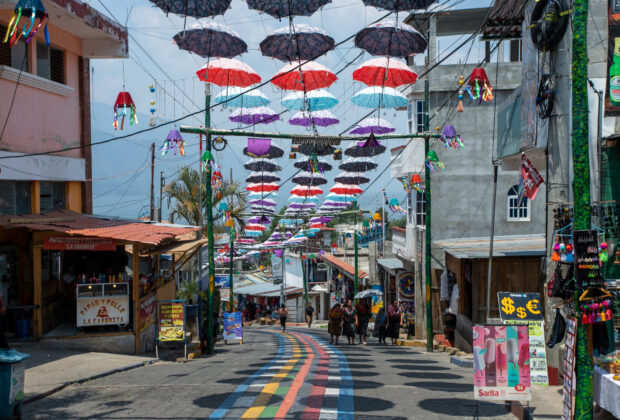
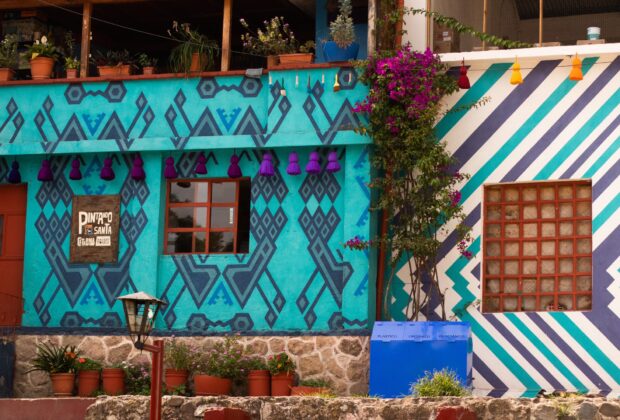
A village known for its weaving collectives and colorful murals. At Christmas, markets get busier, families decorate their homes with candles and flowers, and small processions move through the streets.
Travelers love visiting San Juan during December because you can:
- See local women preparing tamales in big outdoor pots
- Visit weaving cooperatives offering holiday textiles
- Buy handmade Christmas ornaments made with natural dyes
- Experience a calmer, community oriented holiday atmosphere
Santiago Atitlán
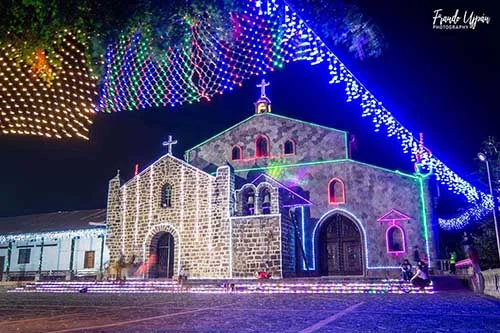
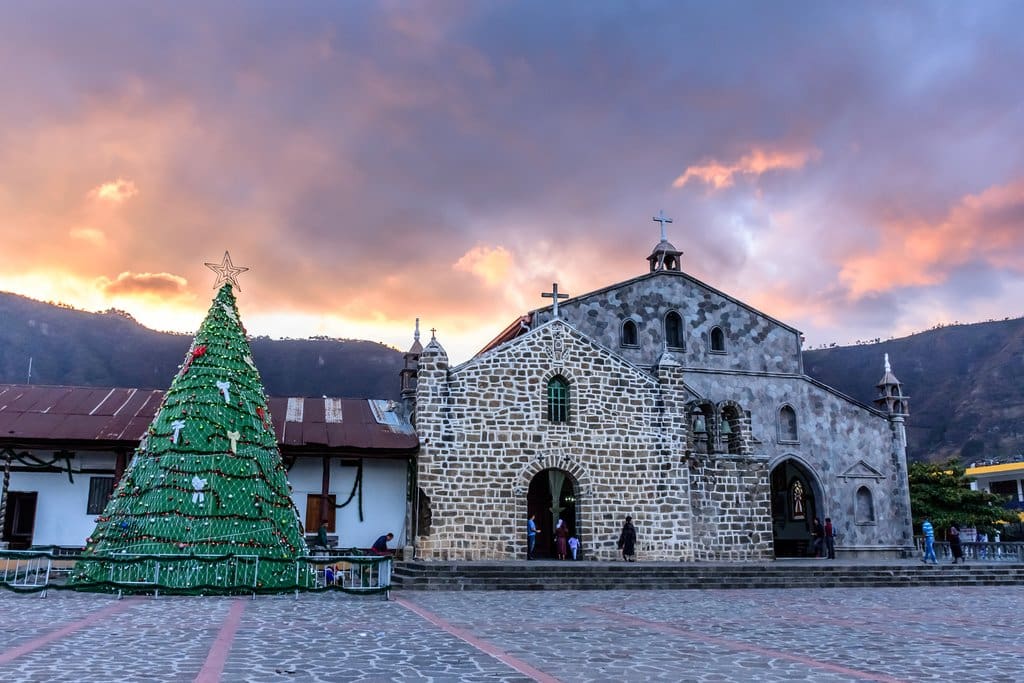
Santiago is deeply spiritual, with strong Tz’utujil traditions. Christmas here feels more ceremonial, with larger church activities, organized processions, and gatherings in the central square.
Here you might see:
- Families carrying candles through the streets
- Community meals in front of the church
- Handmade holiday breads sold at dawn
- Decorations made from palm leaves and local flowers
Our San Marcos, San Juan & Santiago Village Tour brings travelers right into the heart of these traditions. If you join us, we’ll introduce you to the cooperatives, markets, and families we’ve known for years.
Panajachel
Panajachel is busier, with more shops open, more events happening, and more visitors in town. If you're looking for lively markets, restaurants, and easy access to the lake, Pana is a good base during the holidays.
You’ll find:
- Christmas stalls along the main street
- Extra food vendors
- Live music
- Fireworks shows starting early and ending late
Once you understand how each village celebrates differently, the beauty of Christmas around the lake really starts to come alive.
Next, let’s look at the food, because it’s a central part of the holiday season.
Traditional Christmas Foods You Can Actually Taste Here
Food matters at Christmas in Guatemala. Families spend days preparing meals, often working outside with large pots over an open flame. The process is as important as the meal itself.
Here are the main festive foods you’ll see:
• Red or Black Tamales
Red tamales use tomatoes and peppers in the sauce, black tamales include chocolate and spices. Both are wrapped in banana leaves and steamed.
• Ponche de Frutas
A warm fruit punch with pineapple, apple, raisins, cinnamon, and cloves. It’s served in every household from mid-December to New Year’s.
• Champurradas and Roscas
Guatemalan cookies and sweet breads often paired with coffee during the season.
• Pollo Relleno
Stuffed chicken cooked slowly with vegetables, olives, and spices.
Travelers get the chance to try these dishes during our Traditional Guatemalan Cooking Class, led by Alicia, a local woman from the Santa Cruz community. Because she hosts the class in her home, guests get a genuine look at how families prepare holiday dishes.
If you’re here in December, we sometimes offer a special Christmas Tamales Class. You can contact us or check availability on our website.
Now, let’s move from food to one of the most meaningful cultural practices at Lake Atitlán.
The Mayan Fire Ceremony and Its Connection to Christmas
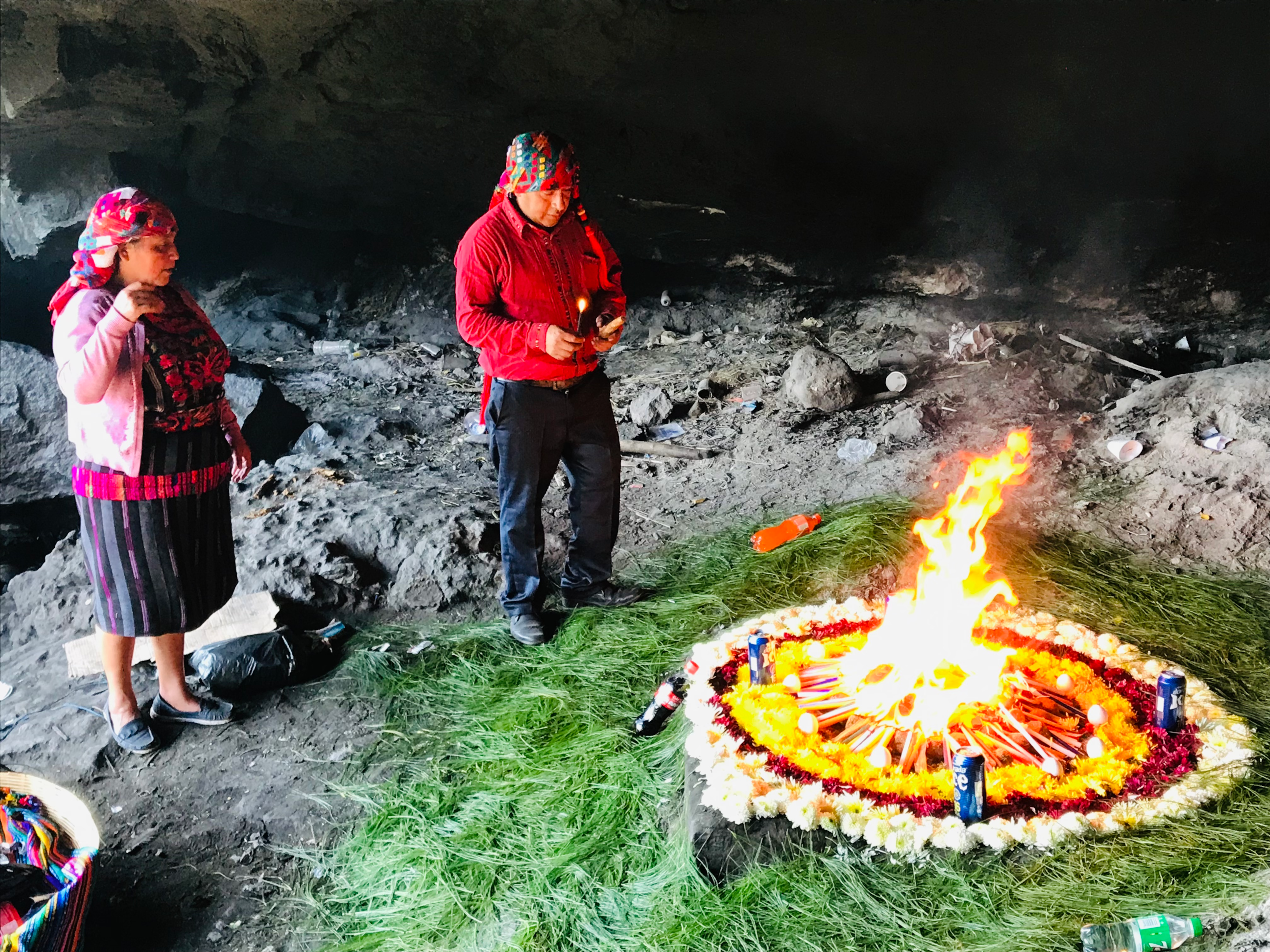
One thing many travelers don’t realize is that Christmas here isn’t only a Catholic celebration. In the Mayan communities around Lake Atitlán, families often blend Christian traditions with ancestral customs. One ceremony that continues throughout the year is the Mayan fire ceremony.
During the holiday season, these ceremonies often focus on:
- Giving thanks for the year
- Asking for blessing and protection for the one ahead
- Honoring ancestors
- Balancing energies
- Setting intentions
The ceremony is led by a Maya spiritual guide. It includes incense, candles, sugar, corn, and symbolic offerings placed into the fire. Each element carries meaning.
The ceremony isn’t a performance. It is personal, reflective, and deeply spiritual.
Many travelers choose to join a ceremony during December because:
- It offers grounding during a busy holiday season
- It provides cultural context for Mayan traditions
- It is a meaningful way to connect with local beliefs
At Kayak Guatemala, we offer authentic Mayan fire ceremonies with spiritual guides we’ve worked with for years. If you’re curious about the deeper traditions behind Christmas in Guatemala, this is one of the most powerful experiences you can have at the lake.
Now that we’ve explored traditions and culture, let’s move into the practical details.
Holiday Markets Around Lake Atitlán: Where to Go and What to Expect
If you enjoy exploring local life, December markets around the lake are a highlight.
What you’ll find at holiday markets:
- Handmade ornaments
- Fresh pine wreaths
- Tamale ingredients sold by the pound
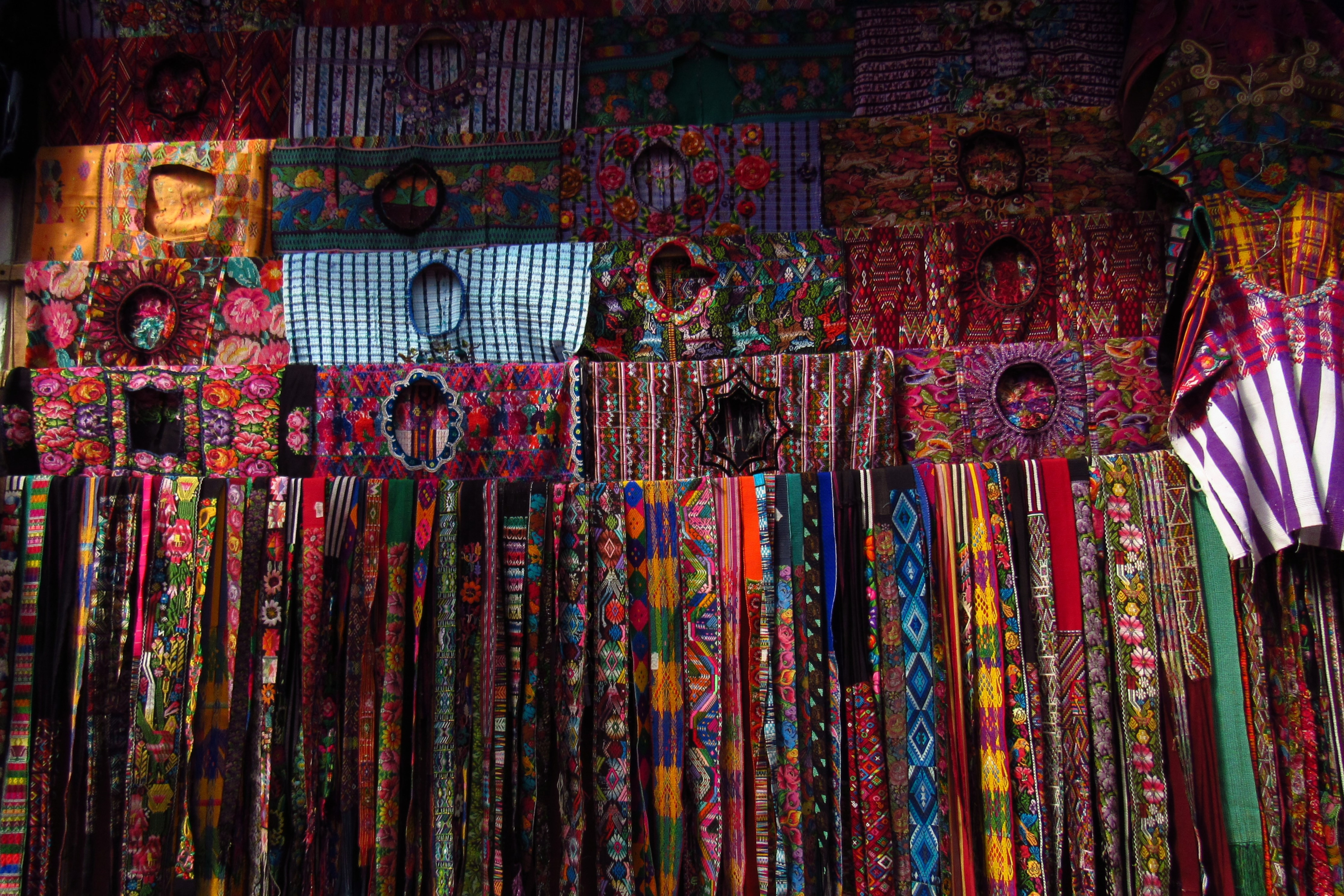
- Local textiles designed for the festive season
- Warm drinks and holiday snacks
- Fruit and spices for ponche
- Incense and candles
- Toys and fireworks for kids
Some markets are small and intimate. Others are busy and lively. The best way to explore them is through our Village and Market Tours, which bring you into homes, cooperatives, and artisan spaces that independent travelers rarely reach.
Finally, let’s talk about how travelers can join these celebrations respectfully.
Meaningful Ways Travelers Can Celebrate Christmas Here
You don’t need to participate in everything. Guatemalan families are very private with their Christmas Eve dinners, but there are many ways travelers can respectfully experience the season.
Here are the best ones:
- Join a guided village tour to learn how families prepare for the holidays.
- Visit morning markets to see how locals shop for the season.
- Take a cooking class to learn the traditions behind tamales and ponche.
- Attend a church procession from the sidelines.
- Book a Mayan fire ceremony to understand the deeper spiritual connection.
- Take a kayak or hike early on Christmas Eve or Christmas Day, when the lake is still quiet and the villages are slowly waking up.
If you'd like to experience Guatemala Christmas traditions in a way that feels authentic, we’d be glad to guide you. Our village tours, market visits, cooking classes, and Mayan fire ceremonies help travelers connect with the culture respectfully and meaningfully.
We hope to welcome you to Lake Atitlán this holiday season.