If you’re going to start a new year somewhere unfamiliar, Guatemala is a surprisingly good place to do it.
New Year’s Eve in Guatemala doesn’t feel staged. There’s no single event you’re meant to attend, no pressure to be anywhere specific at midnight. Instead, the celebration unfolds all around you—on streets, along the lake, in front of people’s homes—and before you realize it, you’re part of it.
That’s what makes it exciting.
I’m Lee Beal, and I’ve lived at Lake Atitlán for more than 20 years. Every December 31, I’m reminded why this place still surprises me. Fireworks echo across the water, neighbors drift outside with chairs and drinks, and the year ends not with a countdown—but with a shared pause.
Whether you’re here at the lake or walking the cobblestone streets of Antigua Guatemala, New Year’s feels open. You don’t need an invitation. You don’t need to know the rules. You just need to be willing to step outside and see what’s happening.
In this blog, I’ll share why Guatemala is such a memorable place to welcome the New Year, what actually happens on New Year’s Eve and New Year’s Day in Lake Atitlán and Antigua, and how travelers can take part in the traditions that make this time of year so unique.
What you’ll take away from this guide:
-
Why New Year’s in Guatemala feels different from anywhere else
-
What really happens on December 31 once the sun goes down
-
The small traditions travelers always notice—and remember
-
A few experiences worth planning once the holiday passes
What New Year’s Eve Feels Like in Guatemala
Before midnight becomes the focus, New Year’s Eve here starts quietly.
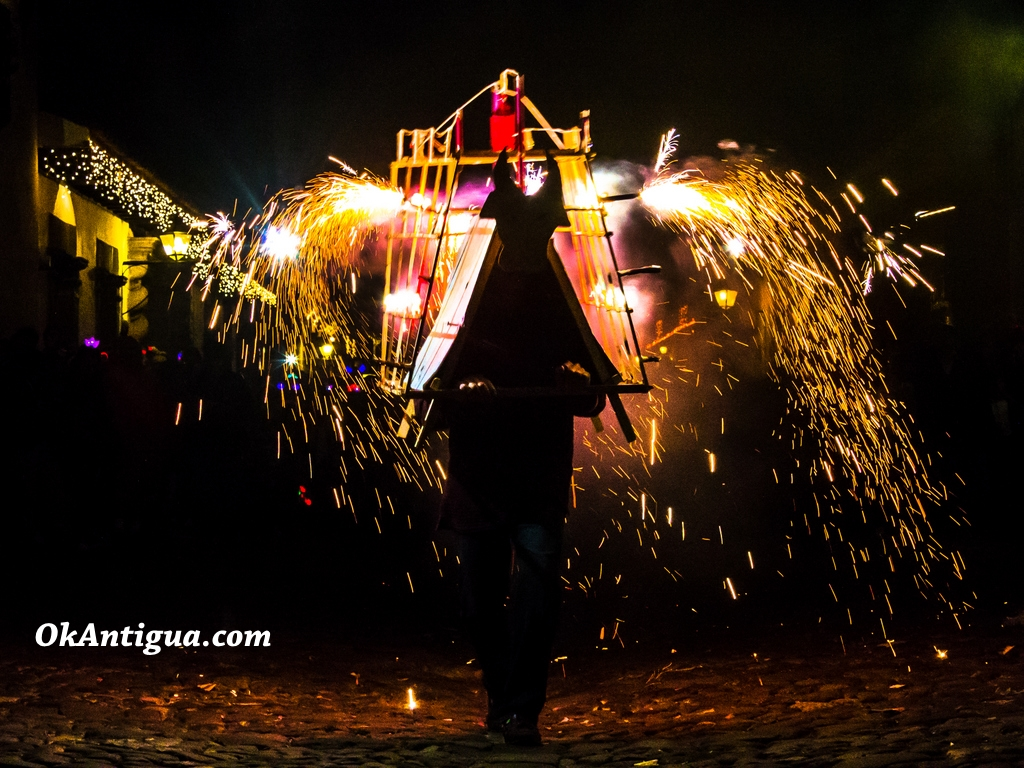
By late afternoon, you’ll hear the first fireworks—just one or two, somewhere down the road. As evening comes, families bring chairs out into the street. Kids light sparklers. Someone puts music on, usually louder than necessary.
There’s no central gathering point. Midnight doesn’t arrive all at once. It rolls through neighborhoods in waves—one firework triggers another, then another, until the sky is full and everyone is awake.
For travelers, this is often the moment when Guatemala stops feeling like a destination and starts feeling like a place people actually live.
A Few Practical Tips from Living Here
After two decades at the lake, these are the things I always tell visitors:
-
Fireworks are loud and close—this is normal
-
Book accommodations early; it’s peak season
-
Transportation is limited late December 31 and early January 1
-
Ask before photographing private moments
-
Leave space in your plans—things move differently during holidays
The Burning of the Año Viejo
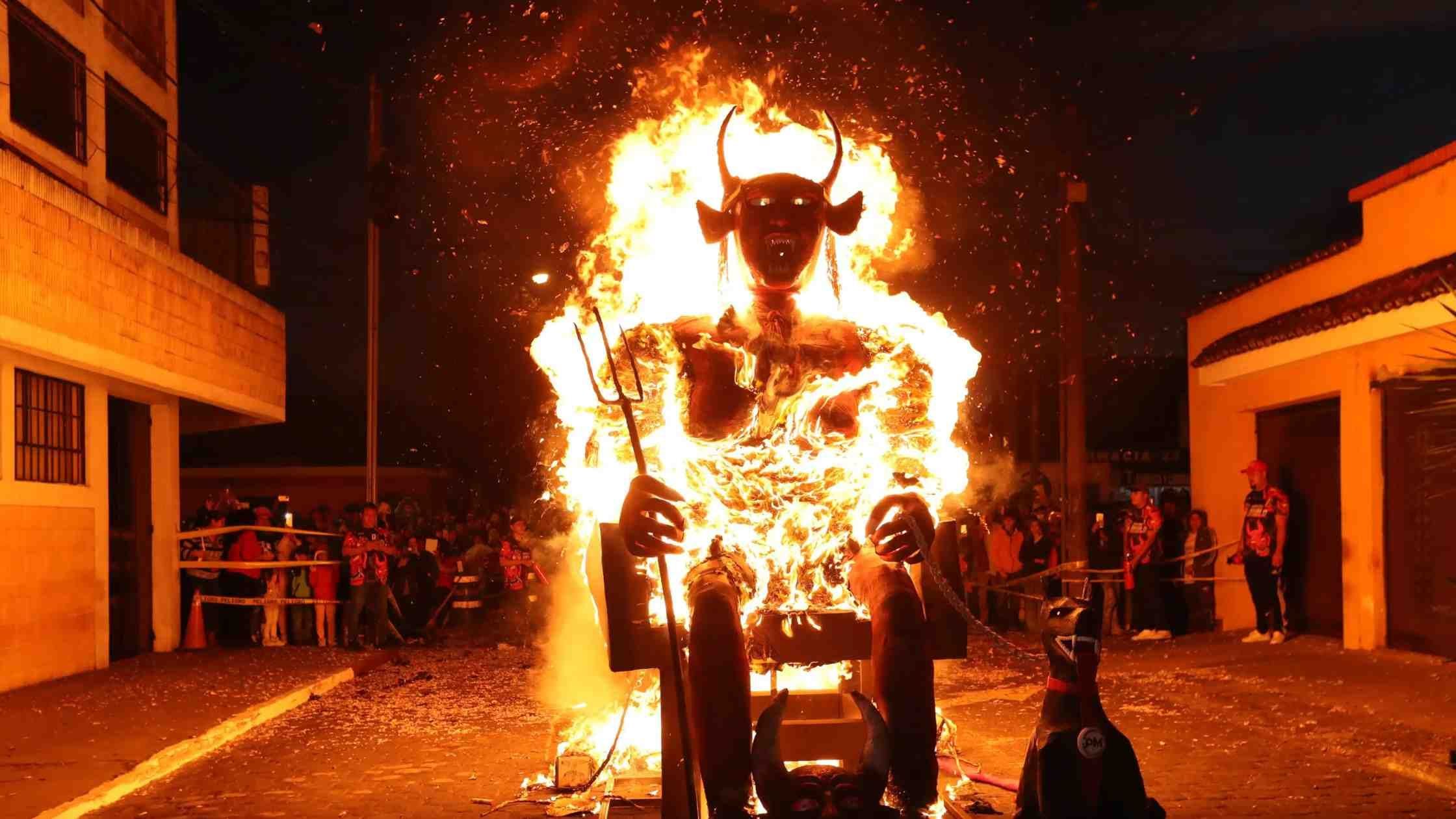
One of the most meaningful things you’ll see on New Year’s Eve is the burning of the Año Viejo, or “Old Year.”
Families make simple life-sized figures out of old clothes and scraps. Before midnight, they place handwritten notes inside—things they’re ready to leave behind.
At midnight, the figure is burned.
I’ve watched this happen dozens of times over the years. It’s never rushed. People stand quietly. Sometimes someone laughs. Sometimes no one says much at all. It’s not a performance—it’s a moment.
If you’re invited to watch, that’s enough. You don’t need to participate to feel the weight of it.
New Year’s Eve at Lake Atitlán
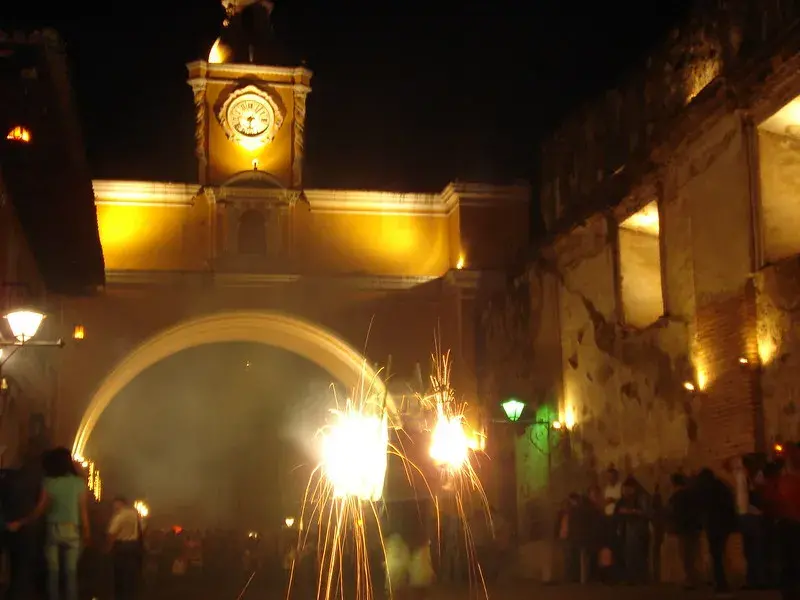
New Year’s Eve at the lake is loud, disorienting, beautiful—and completely normal once you’ve experienced it.
Fireworks launch from villages all around the water. The sound hits the volcanoes and comes back at you. Some years the lake is calm and reflects everything. Other years it’s just light and smoke and noise.
Each village handles the night a little differently.
-
Panajachel is active and social, with fireworks near the docks and people gathering along the shore.
-
San Pedro La Laguna has more international energy—bonfires, music, and small parties by the water.
-
San Marcos La Laguna is quieter, with more space between fireworks and a more reflective feel.
One thing they all share: fireworks are close. Very close. If you’re sensitive to noise, bring earplugs. That’s not a warning—it’s just practical advice.
New Year’s Eve in Antigua Guatemala
Antigua feels more contained than the lake, but no less alive.
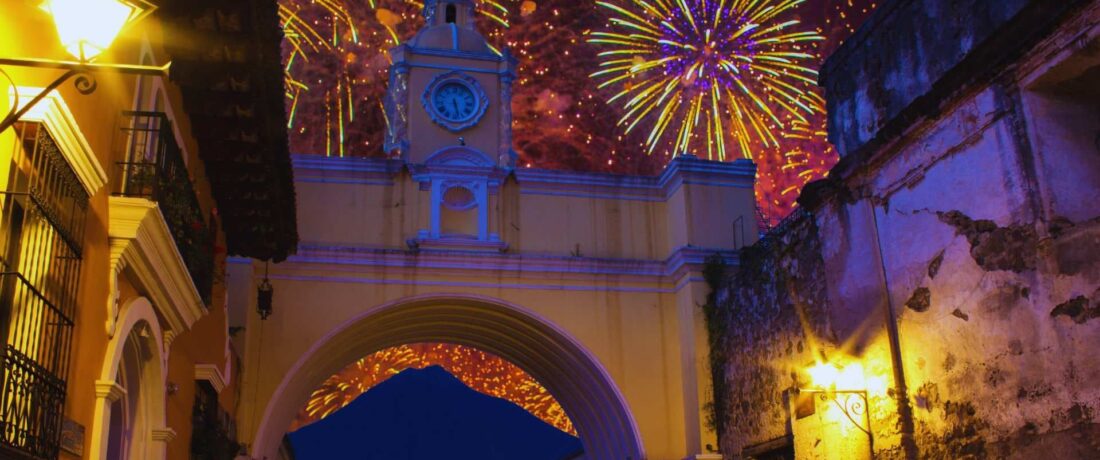
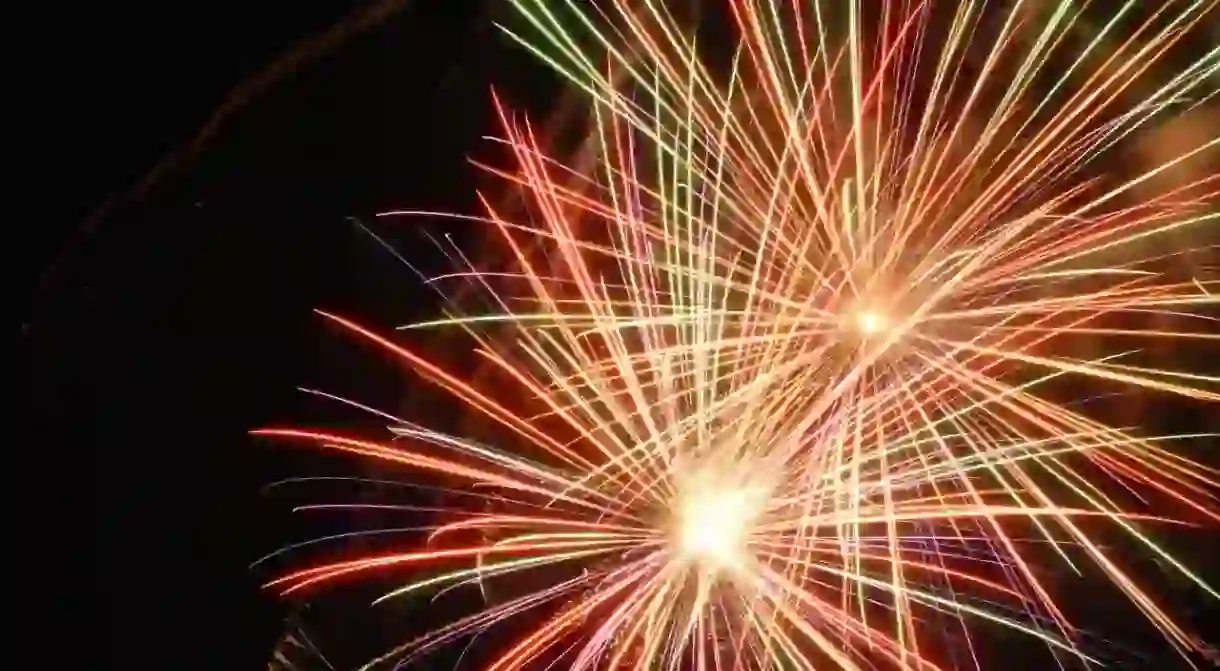
Fireworks rise above church ruins and rooftops. People gather on terraces or wander the streets. You can move through the city easily, stopping wherever feels right.
What I like about Antigua on New Year’s Eve is the flexibility. You can sit down for a nice dinner, walk outside at midnight, and feel fully part of the celebration without committing to anything formal.
The Small Traditions Travelers Always Notice
This is the part of New Year’s in Guatemala that travelers remember most—not the fireworks, but the small, slightly puzzling traditions that start to make sense once someone explains them.
Tradition #1: Wearing Yellow for Good Luck
On New Year’s Eve, you’ll notice yellow everywhere—shirts, dresses, scarves. It’s meant to bring good luck and prosperity in the year ahead.
The first time I noticed it, I assumed it was coincidence. It wasn’t. Now, every year, someone inevitably points at what I’m wearing and asks why I didn’t get the memo.
Tradition #2: Eating 12 Grapes at Midnight
One New Year’s Eve, my wife Elaine and I were in Antigua with friends when someone handed us a small bowl of grapes just before midnight.
We were confused. Our friend explained that you eat 12 grapes at midnight, one for each month of the year, making a wish with each one. It’s a tradition that made its way here generations ago and has been absorbed into local celebrations.
We tried to keep up. We failed. We laughed. And now, every year, someone reminds us again.
Tradition #3: Cleaning the House Before New Year’s
Earlier on December 31, you’ll see people sweeping sidewalks and scrubbing doorways. The idea is simple: start the year without carrying last year’s mess with you.
It’s practical, symbolic, and very Guatemalan.
Tradition #4: Walking with a Suitcase
This one always surprises visitors. Just before or after midnight, you might see someone walking briskly down the street carrying luggage.
It’s believed to invite travel in the year ahead.
I’ve watched tourists laugh—then quietly do it themselves.
What New Year’s Day Is Like
January 1 is calm by design.
Most people stay home. Shops open late, if at all. The lake is often still in the morning, and Antigua’s streets feel unusually empty.
This isn’t a sightseeing day. It’s a day to walk, sit, drink coffee, and let the year start slowly.
Planning tip: schedule tours for January 2. January 1 is for easing in.
Experiences Worth Planning After New Year’s
Once the holiday passes, it’s a great time to explore more deeply.
1. Mayan Fire Ceremony
Kayak Guatemala’s Mayan Fire Ceremony offers a calm and meaningful way to begin the new year. Guided by a local Maya spiritual leader (Ajq’ij), this experience focuses on reflection, gratitude, and intention-setting through traditional offerings and sacred fire.
This is an authentic ceremony—not a performance—designed to be respectful and culturally grounded. Surrounded by the natural energy of Lake Atitlán, guests are invited to observe quietly, reflect personally, and connect with living Maya tradition.
It’s an ideal post–New Year experience for travelers seeking depth, balance, and cultural understanding through Kayak Guatemala’s carefully curated tour.
👉 Book the Mayan Fire Ceremony here
2. Lake Atitlán Village Tour
This guided experience emphasizes cultural respect and meaningful storytelling rather than rushed stops. After New Year’s, the villages are quieter, making interactions more personal and insightful.
Kayak Guatemala ensures each visit supports local communities while offering travelers a deeper understanding of the region’s cultural diversity.
👉 Book the Lake Atitlam #1 Tour Here
3. Lake Atitlán Cooking Class
Kayak Guatemala’s Lake Atitlán Cooking Class is a hands-on cultural experience centered on traditional Guatemalan food. Hosted in a local setting, guests learn to prepare regional dishes using fresh ingredients while discovering the cultural meaning behind each recipe.
The class is relaxed and interactive, creating space for conversation, learning, and connection with local hosts. After New Year’s, it’s a perfect way to slow down and engage with everyday life around the lake.
This experience combines flavor, tradition, and authenticity—carefully curated by Kayak Guatemala.
👉 Book the Lake Atitlan Cooking Class Here
Starting the Year in Guatemala
New Year’s in Guatemala isn’t about spectacle. It’s about small, shared moments—standing outside with neighbors, eating grapes you didn’t expect, watching fire burn away the past, and waking up to a quiet morning.
If you’re planning a holiday trip and want help exploring Lake Atitlán or Antigua in a way that feels grounded and genuine, we’re always happy to help.
— Lee Beal, Kayak Guatemala